


Microplastics are getting a lot of attention right now—from The Plastic Detox to new research finding them in our food, water, oceans, wildlife, breastmilk, and even human organs. The full impacts are still being studied, but what we already know is enough to ask better questions.
We asked you on Instagram what you most wanted to know, and your questions shaped this interview with 5 Gyres, leaders in microplastics and plastic pollution research.
Tell us about 5 Gyres and your research with microplastics.
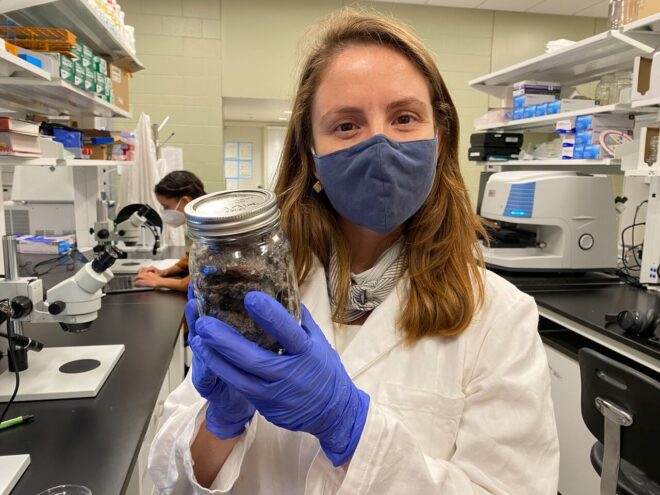
Our work on microplastics, since our founding 15 years ago, has been grounded in the idea that science should inform action. We’ve sailed over 50,000 nautical miles and documented plastic pollution in all five subtropical gyres. Our research has revealed that plastic in the ocean is mostly a smog of microplastics—small plastic particles less than 5mm in size.
In 2023, we published an updated Global Estimate of Marine Plastic Pollution, finding more than 170 trillion plastic particles afloat in the world’s oceans. Unfortunately, that plastic is not easy to clean up.
Today, our research on ocean plastics has led us to focus on various sources of plastic pollution and to find effective solutions.
What excites me the most is that we know a lot about microplastics. Our research is now asking: Which exposures matter most? Which interventions reduce microplastics? And most importantly, how do we reduce harm to the environment and to us?
How do microplastics affect human health and everyday life?
It is undeniable that microplastics are all around us, including the air we breathe, the water we drink, the food we eat, and the soil beneath our feet. Scientists have now detected microplastics in the human body, including blood, lungs, placentas, breast milk, and many other tissues.
We’re still in the early stages of understanding what these findings mean for long-term human health—many of these studies are very new—but research suggests that microplastics contribute to inflammation, oxidative stress, and other negative effects.
The widespread exposure deserves attention. We know microplastics are entering our bodies, but we don’t have all the answers on what they’re doing once there. One of the biggest challenges is that plastics aren’t just plastic—they contain a diverse mixture of chemicals, many of which are known to be harmful.
It feels almost impossible to completely get away from plastics. What types of exposure have the biggest impact on our health and environment? If I am feeling overwhelmed, where is a good place to start?
Plastics are certainly all around us, and it’s not almost impossible to get away from them—it really is impossible. But you don’t need to completely eliminate plastic from your everyday life to make a positive impact. Progress over perfection, as we like to say.
Instead of trying to do everything all at once, here are some places to start:
- Drink filtered tap water and ditch bottled water when possible. Bottled water typically has much higher levels of microplastics compared to tap water.
- Swap out plastic utensils and other plastic kitchenware. Easy swaps include wood or bamboo cutting boards and utensils, glass storage containers, beeswax wraps, and more.
- Avoid microwaving food in plastic or putting hot food into plastic containers. Heat can cause plastics to shed microplastics and toxic chemicals into food.
- Choose fresh foods with minimal processing and packaging. To avoid extra packaging such as single-use produce bags, bring reusable bags to the grocery store or go bagless.
- Vacuum and dust regularly to reduce indoor plastic particles. Inhalation is often our biggest exposure to microplastics.
- Wash clothing less frequently and use gentler wash cycles, such as washing cold instead of hot, to reduce microfiber shedding. More than 60% of the clothes we wear today are plastic—nylon, polyester, spandex, and similar materials—which are a leading source of microplastics in our ocean.
Is there a way to detox the microplastics we already have in our body?
There is currently no medically proven “microplastic detox.” The most evidence-based approach is to reduce exposure. Start with the tips above.
Beyond daily life decisions and behavioral change, what role does policy play in solving this problem?
While individual actions are important, they can’t solve a systemic problem. Policy can play a role in changing these systems.
Plastic pollution is largely driven by how products are designed, manufactured, used, and disposed of. Once plastic is in the environment, it’s difficult and expensive to clean up. Policies that enforce upstream action—turning off the tap—can limit pollution before it enters our environment. These solutions are often more effective than downstream solutions, from recycling to environmental cleanups.
Can you share what your biggest advocacy win to date has been?
Over a decade ago, 5 Gyres researchers collected surface samples in the Great Lakes and discovered a number of small, spherical microplastics. Our scientists traced these particles back to personal care products, including facial scrubs and toothpaste, which contained microbeads used as exfoliants.
Designed to wash down the drain, microbeads enter waterways, oceans, and terrestrial environments. 5 Gyres’ discovery led to a collaborative “Ban the Bead” advocacy campaign, ultimately culminating in the Microbead-Free Waters Act of 2015.
Today, policymakers, businesses, and consumers are talking about the full lifecycle of plastics in ways that were uncommon a decade ago.
You just returned from Washington, D.C. advocating for the #MicroplasticFreeUS campaign. What was that like, and what gives you hope?
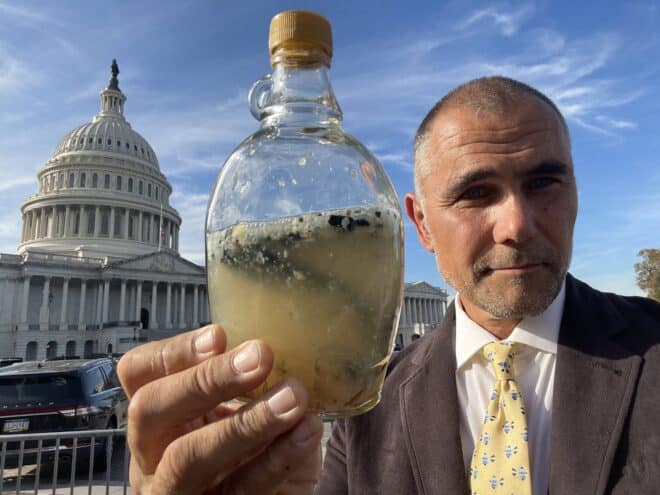
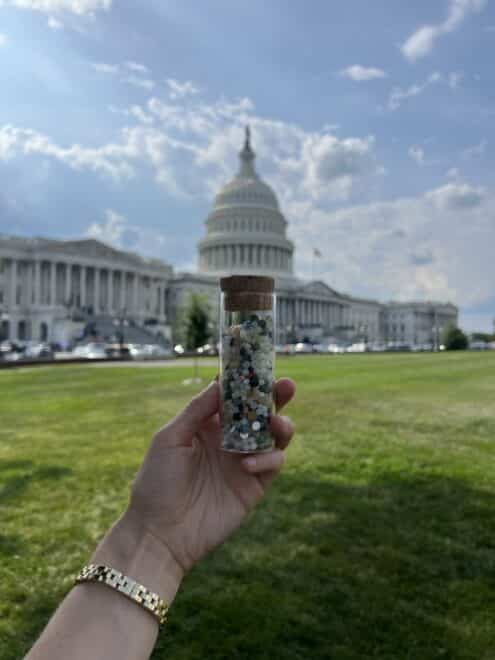
Our policy team just returned from Washington, D.C., where they were joined by fellow advocates. While there, they met with members of Congress to talk about microplastic pollution and solutions.
Conversations with decision makers have been a clear indicator of a shift in understanding. A decade ago, we would spend a lot of time explaining what microplastics are. Today, many people understand the issue and are looking for practical next steps to implement solutions.
At a policy level, this means we’re closer to moving legislation to reduce harm from microplastics in the United States. What gives me hope is that we now have a substantial amount of scientific evidence. As scientists, we’re always working to improve our understanding and answer new questions. But we know enough to act.
We know microplastics are widespread. We know they persist in the environment. We know they’re getting into wildlife and us. And we know there are opportunities to reduce those exposures. We need to accelerate action on implementing solutions.
How can people get involved?
While 5 Gyres continues to work behind the scenes with scientists, policymakers, and brands to address plastic pollution at the source, there are things you can do on the individual level to support a plastic pollution-free future.
- Avoid single-use plastic when possible. Keep reusables handy, like a water bottle, tote bag, coffee cup, and utensils.
- Do a TrashBlitz. Contribute to community science that drives change by doing a cleanup and submitting your data through the TrashBlitz app.
- Become a 5 Gyres Ambassador. Join a global community of changemakers using their unique experiences and skillsets to support the movement.
- Use your voice to support a Microplastic-Free U.S. Sign the petition to join 5 Gyres in demanding targeted solutions and policy interventions that protect public and environmental health.
What can everyday brands and businesses be doing to be part of the solution?
One of the biggest lessons we’ve learned from studying plastic pollution is that there are few silver bullets. Businesses are often eager to find the next material or product that will solve the problem. But plastic pollution is ultimately a systems problem, and systems problems rarely have simple fixes.
The first step for businesses is asking a deceptively simple question: Do we need this? The most effective way to reduce plastic pollution may be eliminating unnecessary materials, packaging, or products in the first place.
The second is being willing to evaluate solutions with careful vetting. We’ve seen cases where well-intentioned alternatives create new challenges—also called “regrettable substitutions.” Innovation should be accompanied by careful and independent evaluation.
Finally, businesses have an opportunity to think beyond their own products. Some important decisions in design, sourcing, and manufacturing can translate to improvements across sectors. The companies that will lead in this space are the ones willing to look at the full lifecycle of their products and seek out system changes.
The good news is that many businesses are already on that journey. Sharing this progress with individuals is also key, since brands often have a big megaphone to talk about these issues.
We take the emerging science on microplastics seriously. Doing right by our customers and treating the Earth like home means using the best available research—and trusted partners—to guide how we reduce plastic in our business, while being honest that meaningful change takes time.
We also support advocacy and policy that addresses plastic pollution at the source, and we encourage other brands and consumers to push for solutions with us.
Dr. Lisa Erdle, 5 Gyres’ Director of Science & Innovation, contributed to this post.