
Dr. Bronner’s “All-One Activist” series profiles influential activists who are advancing the core causes that Dr. Bronner’s supports through its philanthropy and advocacy.
As part of our ongoing All-One Activist series, we are highlighting the organizations supported through the All-One Canada Initiative, the Canadian chapter of Dr. Bronner’s All-One International Initiative. Through this initiative, at a minimum, 1% of sales from participating international markets is donated annually to support local efforts focused on social justice, environmental sustainability, and animal advocacy.
The Fraser River originates in the Rocky Mountains near Jasper National Park and winds its ways through old growth forests, valleys, wildlife corridors, canyons, ancient and endangered sturgeon habitats, and provides runs for five species of Pacific salmon before it flows into the Salish Sea near Vancouver in British Columbia. Its massive watershed covers over 220,000 square kilometers, and over a quarter of British Columbia’s fresh water flows through it. Climate change, agriculture, urbanization, and industrialization have had devastating consequences on complex ecosystems like watersheds where land, First Nations peoples, settlers, plants, animals, and water are inextricably interconnected.
Rivershed Society of BC, a Dr. Bronner’s All-One Canada partner since 2020, was founded in 1995 to encourage communities to connect, protect, and restore the Fraser River and its 34 riversheds. One of its core principles is that restoration of land can’t be done without people, especially the First Nations who have stewarded the land from time immemorial.
Rivershed Society of BC’s Foodlands Corridor Restoration Program centers First Nations and Knowledge Keepers, in collaboration with private landholders and other stakeholders, to restore and connect privately held parcels to form a natural corridor that supports a healthy, sustainable, and just food system in the
sc̓e:ɬxʷəy̓əm Restoration Corridor (sc̓e:ɬxʷəy̓əm is the hən̓q̓əmin̓əm̓ name for Salmon River; hən̓q̓əmin̓əm̓ is the Downriver dialect of Halkomelem).
Dr. Bronner’s PR team was honored to interview Justine Nelson, who has been with Rivershed Society of BC for a decade, serving as its Executive Director for the past six years. Justine and her family live along the Fraser River, and she considers serving as Executive Director both a privilege and a responsibility. This means evolving Rivershed into an organization rooted in collaboration, reconciliation, and long-term impact through work that connects her family, her community, and her sense of purpose — ensuring that the watershed is healthy, vibrant, and cared for.
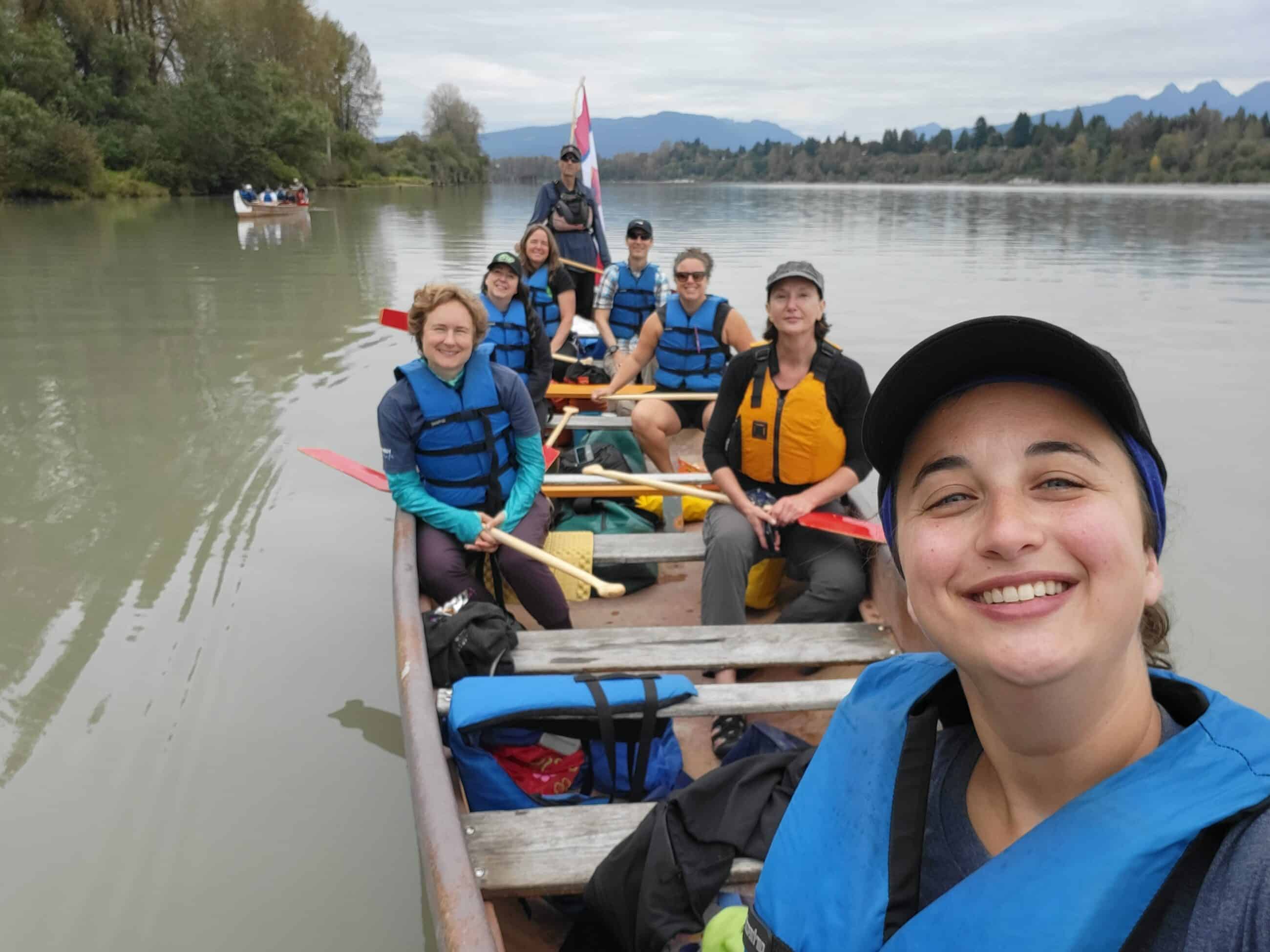
Rivershed Society of BC’s mission is to “Connect, protect, and restore the Fraser’s 34 riversheds.” What work or programs bring that mission to life?
When I think about how our mission comes to life, the Foodlands Corridor Restoration Program is the clearest example. It’s where our values of collaboration, reconciliation, and ecological restoration all come together.
Foodlands is about more than planting trees. It’s about creating ethical spaces of engagement where First Nations, farmers, and conservation groups co-design riparian corridors that heal the land and water. Along the sc̓e:ɬxʷəy̓əm Salmon River, for example, we’ve worked with partners to stabilize banks, restore salmon habitat, and bring Indigenous language and knowledge back into the landscape. These corridors don’t just support fish and wildlife — they also make farms more resilient and create healthier spaces for communities.
At the same time, Foodlands doesn’t stand alone. It’s part of a bigger picture. Our Watershed Workforce program gives youth the chance to experience the watershed, and then spend time restoring tributaries alongside Elders and experts — often at Foodlands sites. Our Watershed CPR Dashboard is mapping these projects across the Watershed, showing how local efforts add up to watershed-wide impact.
Why is this work needed, and what should people understand about the impact you’re striving to make?
The Fraser Watershed is the largest watershed in BC and one of the most ecologically and culturally significant in Canada. It’s home to wild salmon, which are central to ecosystems, economies, and cultures. But the watershed is under immense pressure from climate change, habitat loss, and industrial activity.
Through Foodlands we’re responding to those pressures in a tangible, hopeful way. By restoring riparian corridors, we’re not only improving salmon habitat — we’re also strengthening relationships between people and place. The impact we strive for is ecological and social: healthier rivers, resilient communities, meaningful jobs, and stronger collaborations with First Nations.
How has the work of Rivershed Society of BC evolved during your time with the organization?
We’ve evolved from awareness-raising to building large-scale, collaborative place-based programs like Foodlands that put Watershed CPR (Connect. Protect. Restore.) into practice. This evolution has been grounded in relationships, strengthening trust, learning together and working toward shared goals. We’ve deepened partnerships with First Nations, expanded restoration into multi-year regional initiatives, and created tools like the Watershed CPR Dashboard to connect and highlight the collective impact of local action across the Fraser Watershed.


What are some of the biggest challenges you face, and how does Rivershed Society of BC work to overcome them?
The challenges are significant. From climate impacts like drought, wildfire, and flooding to capacity gaps for location groups and nations leading restoration on the ground.
Foodlands helps respond to these challenges by strengthening relationships and building networks of collaboration. By working with farmers, First Nations, and communities, we’re finding approaches that can be adapted in other regions, and by advocating for long-term watershed security funding, we’re helping ensure these efforts can grow over time.
You mention partnerships and collaboration with First Nations — is there an especially illustrative example of this type of collaboration in action?
A strong example is the Foodlands Corridor Restoration Program, which we have co-developed with First Nations and local collaborators across several regions of the Fraser.
On the sc̓e:ɬxʷəy̓əm Salmon River in the Lower Fraser, we’ve been working alongside Kwantlen First Nation, Fraser Valley Watersheds Coalition, farmers and other collaborators, to restore riparian corridors that support salmon while respecting cultural and agricultural values. Together, we’re blending Traditional Ecological Knowledge and Western science — using native plants important to both salmon and people, supporting land guardianship, and designing projects that restore ecological function and cultural connection.
This kind of collaboration isn’t just about restoring habitat; it’s about restoring relationships. It shows how co-governance, consent-based processes, and shared decision-making can lead to outcomes that are ecologically sound and socially just. That’s the future we’re working toward — where the health of the watershed and the well-being of its people are one and the same.

Dr. Bronner’s All-One! mission is all about recognizing our interconnectedness. How is relationship building important to the work you do?
Foodlands is, at its heart, about relationships — about people, place, and water. It creates space for learning and collaboration, where shared care for the land leads to shared understanding. That’s what interconnectedness looks like in practice: recognizing that healthy rivers depend on healthy relationships, rooted in respect, reciprocity, and trust.
What other movements or movement work or organizations do you find particularly inspiring or promising right now?
I’m inspired by Indigenous-led stewardship efforts across BC, including Indigenous Guardians programs and watershed boards like Cowichan’s. I’m also encouraged by the creation of the co-led BC Watershed Security Fund, a great start that, with further investment, can grow to meet the scale of need and provide stable, long-term funding for local initiatives like Foodlands.
How can readers best support your work?
Readers can support this work in many ways. By donating to help us expand Foodlands and other programs, by joining an event to connect personally with the Fraser, by sharing our stories to amplify the message, and by advocating for investments in the watershed security fund so restoration has the long-term support it needs.
How has Dr. Bronner’s support helped advance your work, and why is it important that companies like Dr. Bronner’s fund this kind of impact?
Dr. Bronner’s has been a steadfast supporter since 2020, helping Foodlands grow, strengthening capacity, and reaching more communities across the Fraser Watershed. Your continued support has made it possible to connect youth with meaningful watershed experiences and advance restoration projects that create tangible ecological benefits.
When companies like Dr. Bronner’s invest in this work, you not only support environmental outcomes — you also signal that healthy watersheds matter to everyone. That kind of leadership helps build a culture of care and responsibility that extends far beyond one organization.
What’s your favorite Dr. Bronner’s product and scent?
Definitely the Lavender Pure-Castile Magic Soap. I use it for pretty much anything, and the scent is so relaxing.
To learn more about the Fraser River and its watershed, check out Rivershed Society of BC’s website with its interactive dashboard and features, and this resource from the government of Canada. Translations provided by Knowledge Keepers and language learners from Kwantlen and Katzie Nations.